 Skip to content
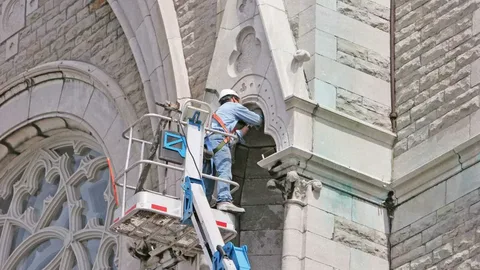
Heritage building restoration is the disciplined repair and conservation of historically significant structures so they retain their original character while meeting modern standards of safety and durability. Across the Greater Toronto Area, where Victorian rowhouses, early-twentieth-century commercial blocks, and designated landmarks sit alongside new construction, this work carries a responsibility that ordinary repair does not. A heritage façade is not simply a surface to be patched; it is a record of materials, craftsmanship, and design intent that must be protected even as the building is made sound again.
Restoring these structures well requires a contractor who understands both the trade and the rules that govern it. CCD Group Building Restoration Ltd. works throughout Toronto and the wider GTA, applying conservation-minded methods to masonry, façades, and building envelopes that owners cannot afford to get wrong.
What Makes Heritage Restoration Different From Ordinary Repair
The distinction lies in intent and method. Standard repair aims to restore function as quickly and economically as possible. Heritage building restoration aims to restore function while preserving the original fabric — the historic brick, stone, mortar, and detailing that give a structure its identity and, often, its legal protection.
That difference dictates everything that follows. A modern crew might repoint a brick wall with a hard Portland-cement mortar because it sets fast and looks uniform. On a heritage wall, that same mortar can be destructive: it is harder than the surrounding historic brick, so as the building expands and contracts through the GTA’s freeze-thaw cycles, the stress is forced into the softer masonry, causing it to spall and crumble. Proper heritage work specifies a compatible lime-based mortar that flexes with the wall and allows it to breathe. The same principle of compatibility — matching new materials to old in strength, porosity, and appearance — runs through every part of the discipline.
The Regulatory Framework Owners Must Respect
Heritage restoration in Ontario operates within a legal structure that owners ignore at their peril. Properties may be listed or formally designated under the Ontario Heritage Act, and designation typically means that alterations to protected features require a heritage permit from the municipality before work begins. Toronto, Mississauga, and other GTA municipalities maintain heritage registers and review committees that assess proposed changes against conservation principles.
Beyond municipal rules, restoration practice in Canada is guided by the Standards and Guidelines for the Conservation of Historic Places, which favour minimal intervention, the retention of original material, and reversibility wherever possible. A contractor who understands this framework protects the owner from costly violations and helps assemble the documentation that permit applications require. This regulatory fluency is part of what separates a genuine restoration specialist from a general renovator, and it is a dimension of trustworthiness that property owners should weigh heavily before hiring.
Core Disciplines Within Heritage Building Restoration
Heritage restoration is rarely a single task. It is a coordinated set of trades, each addressing a different vulnerability in an aging structure.
Masonry conservation sits at the heart of most projects. Repointing — the careful removal of failed mortar and its replacement with a compatible mix — restores weather resistance and structural cohesion, while damaged brick or stone units are repaired or replaced in kind. This is delicate work that defines the long-term outcome, and it is the focus of CCD Group’s masonry repair services. Owners researching how to vet a mason will find practical guidance in the company’s overview of trusted masonry repair contractors in Toronto.
Façade treatment follows. Once the masonry is sound, breathable mineral coatings and historically appropriate finishes protect the surface without trapping moisture inside the wall — the kind of work covered by professional architectural coating and painting. Choosing a vapour-permeable system is essential on heritage walls, since film-forming modern paints can seal in moisture and accelerate decay.
Joint sealing and weatherproofing complete the envelope. Failed sealant around windows, copings, and transitions is one of the most common entry points for water, and addressing it through expert caulking services prevents the moisture intrusion that drives most masonry deterioration in the first place. Together, these disciplines protect the building from the outside in.

Why Moisture Is the Central Threat
Almost every form of heritage deterioration traces back to water. Moisture intrusion saturates masonry, then expands as it freezes through the GTA’s harsh winters, fracturing brick and stone from within. It dissolves and redeposits salts as efflorescence, corrodes embedded steel, and washes out the binders that hold historic mortar together. A restoration that does not control water is temporary by definition.
This is why a competent restoration plan treats the building as a single system — its masonry, coatings, and sealed joints working in concert to keep water out — rather than as a list of isolated repairs. The reasoning behind that systemic approach is explored further in CCD Group’s discussion of why property owners prioritize professional building restoration services.
How to Choose a Heritage Restoration Contractor in the GTA
The right contractor demonstrates four things by evidence rather than assertion. The first is relevant experience: a verifiable record of completed heritage and masonry projects, not merely general construction. The second is material knowledge — fluency in lime mortar, breathable coatings, and the compatibility principles that protect historic fabric. The third is regulatory understanding, including familiarity with the Ontario Heritage Act and the municipal permit process. The fourth is transparency, shown through detailed inspections, honest condition assessments, and clear written scopes of work.
A contractor who offers masonry repair, architectural coating, and caulking under one roof also reduces the coordination risk that fragmented projects invite, keeping responsibility for the building envelope in a single, accountable pair of hands.
Protecting Property Value and Heritage Character
Done correctly, restoration does more than prevent decay. It safeguards the long-term value of a property, sustains the architectural character of GTA neighbourhoods, and honours the craftsmanship of the people who built these structures generations ago. Done poorly — with incompatible materials or unpermitted alterations — it can erode both value and heritage standing irreversibly. The stakes are precisely why this work belongs with specialists.
Frequently Asked Questions
Do I need a permit to restore a heritage building in the GTA? If the property is designated under the Ontario Heritage Act, alterations to protected features generally require a heritage permit from the municipality. A knowledgeable contractor will confirm the property’s status and the approvals needed before work starts.
Why can’t I use regular cement mortar on an old brick wall? Modern Portland-cement mortar is harder and less permeable than historic brick. It forces stress and trapped moisture into the softer masonry, causing it to crack and spall. Compatible lime-based mortar flexes with the wall and lets it dry, which is why heritage work specifies it.
Can a heritage building be made energy-efficient and weathertight? Yes. Sealing failed joints, restoring breathable coatings, and repairing masonry all improve performance without compromising historic appearance, provided vapour-permeable materials are used.
How long does heritage restoration take? Timelines depend on the building’s condition, the extent of masonry work, weather windows, and any permit approvals required. A thorough inspection is the only reliable basis for a schedule.
Begin Your Heritage Restoration Project With Confidence
Preserving a historic building in the GTA demands compatible materials, regulatory diligence, and a systemic approach to keeping water out — handled by a contractor who treats the structure’s character as carefully as its strength. CCD Group Building Restoration Ltd. brings that conservation-minded expertise to masonry, façades, and building envelopes across Toronto and the surrounding region.
To assess your building’s condition and plan the right scope of work, contact CCD Group to schedule a consultation and detailed inspection.
