 Skip to content
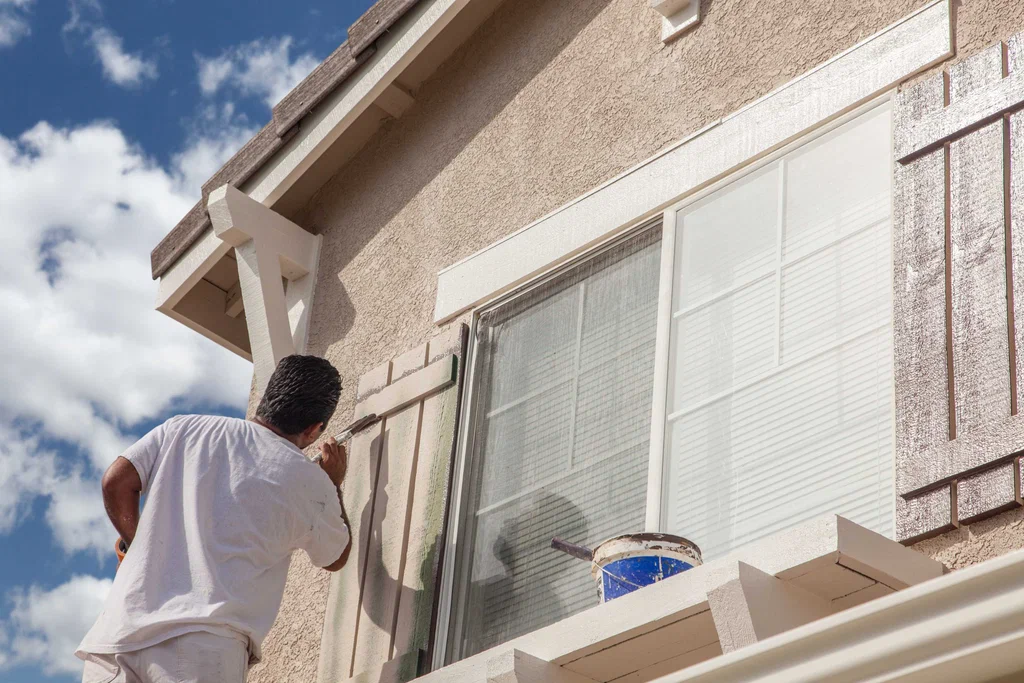
A building’s paint or coating system is doing more work than most people give it credit for. It’s not just the layer that determines curb appeal — it’s the first line of defense between the structure underneath and everything the weather throws at it: rain, UV radiation, temperature swings, road salt, humidity, and years of freeze-thaw cycling in a climate like Toronto’s or the GTA’s. When that coating is chosen correctly and applied properly, it can protect a building’s exterior materials for a decade or more. When it’s rushed, mismatched to the substrate, or applied under the wrong conditions, it can start failing within a year or two — and failing paint isn’t just a cosmetic problem; it’s often the first visible sign of moisture getting somewhere it shouldn’t.
If you’re researching architectural coating and painting for a property, you’re likely facing one of a few situations: an aging exterior that’s chalking, fading, or peeling; a new build or addition that needs its first protective finish; a commercial property where appearance affects tenant leasing or brand perception; or a maintenance program driven by a condo board or property management company trying to get ahead of bigger repair costs. Each of these situations calls for a slightly different approach to product selection, timing, and scope — but they all depend on understanding what a coating actually needs to do before choosing who does the work.
What “Architectural Coating” Actually Means
The term covers more ground than standard house paint. Architectural coatings include a range of products engineered for exterior and interior building surfaces, each formulated for a specific substrate and set of performance demands:
Elastomeric coatings stretch and flex with a building’s movement, making them useful over stucco, EIFS, and masonry that undergo thermal expansion and minor cracking. Their flexibility helps bridge hairline cracks that rigid paint would simply crack along with the substrate.
High-performance acrylics balance durability, flexibility, and cost, and are the most common choice for general exterior masonry, siding, and trim work where a strong, long-lasting finish is needed without the premium cost of specialty systems.
Protective and industrial coatings are formulated for surfaces under heavier stress — metal railings, structural steel, high-traffic areas, or surfaces exposed to chemicals or heavy moisture. These often include anti-corrosive properties that standard paint doesn’t provide, and they’re especially common in projects like our underground garage structure repairs, where exposed concrete and steel face constant moisture and salt exposure.
Reflective and low-VOC formulations address two increasingly common priorities: energy performance and environmental impact. Reflective coatings reduce heat absorption, which can meaningfully affect a building’s cooling load in summer, while low-VOC products reduce off-gassing, which matters for interior air quality and for projects on occupied buildings.
Matching the right category to the right surface is the first decision point, and it has a greater impact on long-term performance than brand or color selection.
Why Ontario’s Climate Puts Real Demands on a Coating System
Toronto and the surrounding GTA don’t have the mildest climate for exterior finishes. A few specific conditions shape how coatings should be selected and applied here.
Freeze-thaw cycling. Ontario winters swing through repeated freeze-and-thaw cycles, and each cycle stresses a coating’s ability to expand and contract with the substrate beneath it. A rigid or brittle coating that performs fine in a stable climate can crack here simply from repeated movement.
Humidity and moisture exposure. Spring and fall bring extended periods of dampness, and coatings applied without adequate cure time or moisture management can trap moisture against the substrate, leading to blistering or premature failure.
UV exposure through long summer days. UV breakdown is one of the most common reasons exterior coatings fade, chalk, or lose adhesion over time. Lower-grade paints degrade visibly within a few years under sustained UV exposure, while properly formulated architectural coatings are designed to resist this for much longer.
Road salt and airborne pollutants in urban areas. Buildings closer to major roads or in dense urban cores are exposed to higher levels of airborne contaminants and salt spray during the winter months, which accelerates wear on both the coating and, if the coating fails, the underlying substrate.
A contractor with real experience coating buildings in this climate will factor all of this into product selection rather than defaulting to whatever’s cheapest or most familiar.
Where Coating Failure Actually Starts
Most people notice paint problems as color or texture issues — fading, chalking, peeling — but the underlying cause is usually more structural.
Inadequate surface preparation. This is, by a wide margin, the most common reason coatings fail early. Applying new paint over dirt, old chalky residue, mildew, or peeling material means the new coat has nothing solid to bond to, regardless of how good the product itself is.
Moisture behind the surface. If water is getting into a wall assembly from a failed sealant joint, damaged flashing, or a masonry crack, no surface coating will hold up for long because the moisture is pushing outward from behind. In these cases, the coating failure is a symptom of an envelope problem that needs to be addressed first — often starting with our caulking contractor services to reseal failed joints before any new coating goes on.
Wrong product for the substrate. Stucco, masonry, wood, metal, and vinyl all move and absorb moisture differently. A coating formulated for one substrate applied to another — say, a rigid paint applied over a flexible EIFS surface — is likely to crack along movement joints within a few seasons. Masonry surfaces with existing mortar deterioration usually need masonry repair completed first, since coating over damaged masonry only masks a problem that will resurface.
Application outside acceptable conditions. Most architectural coatings have minimum and maximum temperature and humidity ranges for proper application and cure. Painting during a cold snap, in direct high heat, or right before rain compromises adhesion and film formation, even if the crew is skilled and the product is high-quality.
What a Competent Coating and Painting Contractor Actually Does Differently
The visible difference between a good exterior paint job and a mediocre one often shows up only after a season or two, once the shortcuts start to reveal themselves. A handful of practices separate contractors who deliver lasting results from those who don’t.
A real substrate assessment before quoting. A contractor who walks the property, checks for moisture issues, evaluates existing coating condition, and identifies problem areas before quoting is working from an accurate picture. One who quotes a flat per-square-foot price sight unseen is estimating blind.
Proper surface preparation as a distinct, budgeted phase. Pressure washing, scraping, sanding, patching, priming problem areas, and allowing adequate dry time before coating should be treated as separate, necessary steps — not corners to cut to speed up the visible painting phase.
Product selection tied to the specific substrate and exposure. A contractor who can explain why they’re recommending an elastomeric coating over stucco rather than a high-performance acrylic over siding is demonstrating actual product knowledge rather than a one-size-fits-all approach.
Weather-aware scheduling. Coating work should be scheduled around temperature and humidity windows suitable for the specific product being used, not around whatever slot happens to be open on the crew’s calendar.
Clear documentation of products and warranty. You should be able to find out exactly what product was applied, at what coverage rate, and what warranty backs the work — both the manufacturer’s product warranty and the contractor’s workmanship warranty.
Residential vs. Commercial Coating Projects
Residential exterior painting and commercial architectural coating share the same underlying principles, but the scale and stakes differ.
Residential projects are usually about a single building’s exterior — siding, trim, masonry, sometimes a deck or fence — where the main considerations are curb appeal, protection, and matching the finish to how long the owner plans to stay in the property. Interior painting for a home renovation follows a simpler set of rules, with a greater focus on finish quality and low-VOC options for occupied living spaces.
Commercial and multi-residential projects introduce additional layers: larger surface areas that need to be sequenced efficiently, tenant or occupant communication throughout the project, compliance with any condo corporation or property management requirements, and often a business case tied to leasing appeal or brand consistency across multiple properties. Protective and industrial coatings become more relevant here too, particularly for underground parking structures, exposed steel, and high-traffic common areas — and where structural concrete repair or siding installation and repair is needed alongside the coating work, it’s worth having both scoped by the same contractor to keep the timeline and warranty coverage aligned.
Questions Worth Asking Before You Hire
- What product line are you proposing for each surface type on my building, and why that specific product?
- What does your surface preparation process include, and is it itemized separately from the coating application?
- How do you handle areas where you find moisture damage, cracking, or existing coating failure during prep?
- What’s the manufacturer’s warranty on the coating, and what workmanship warranty do you provide separately?
- How do you plan around weather and seasonal application windows in Ontario?
- Can you show examples of similar projects — same substrate, similar exposure — completed in the last two or three years?
A contractor who answers these with specifics, rather than general reassurances, is usually the one who’ll deliver a finish that holds up.
Timing a Coating Project Around the Seasons
Most exterior coating work in this region needs to occur within a window when temperature and humidity remain within a product’s application range — typically spring through early fall, with some products tolerating a wider range than others. Projects planned for late fall or scheduled tightly against the first frost carry real risk of improper cure, which can show up as adhesion failure the following spring even if the finish looked fine on the day it was applied.
For larger commercial or multi-building projects, this seasonal window also means planning and scheduling well in advance, since reputable coating contractors tend to book their prime-season slots early. Owners managing a maintenance program across multiple properties often stagger projects across a couple of seasons for exactly this reason.
The Bottom Line
Architectural coating and painting is one of the more visible investments a property owner makes, but its real value lies almost entirely in what it prevents — moisture intrusion, material degradation, and the accelerated aging of expensive building components beneath the surface. A coating system chosen to match the substrate, applied with real surface preparation, and installed within the right seasonal window will protect a building for many years. One applied quickly, with inadequate prep, and using a mismatched or lower-grade product will show its limits within a season or two — and by then, the cost of redoing it properly is higher than doing it right the first time. The contractor’s process, not just their price, determines the outcome you get.
Get a Free Coating Assessment
If your Toronto or GTA property’s exterior is fading, chalking, or showing early signs of coating failure, CCD Group Building Restoration Ltd can assess the substrate and recommend the right system for your building. Get in touch:
- Call: +1 (647) 612-6776 or +1 (437) 961-5757
- Visit: Contact Us to request a quote
- Address: 6020 Bathurst Unit 614, Toronto, ON M2R 1Z8 — serving the GTA
